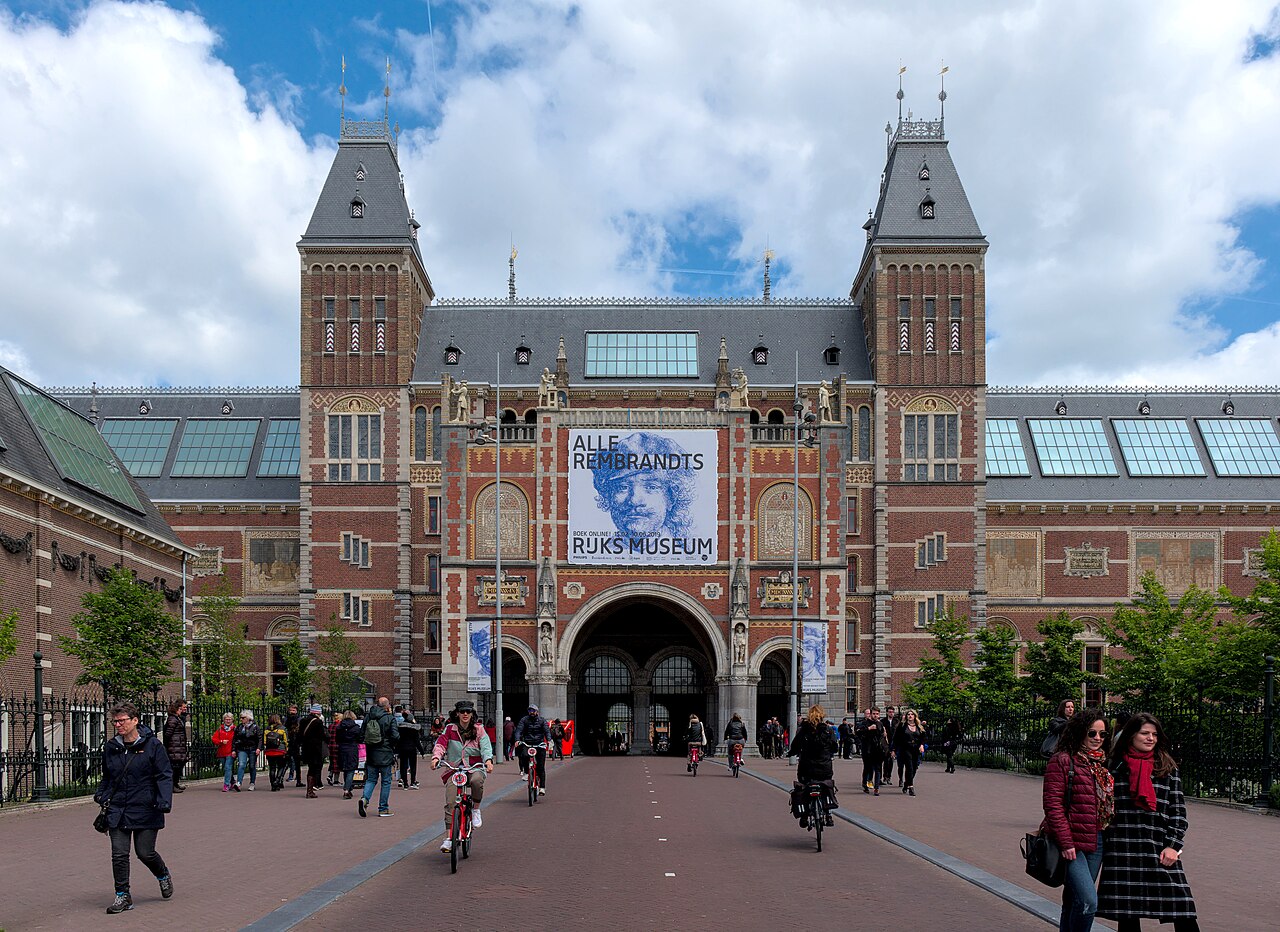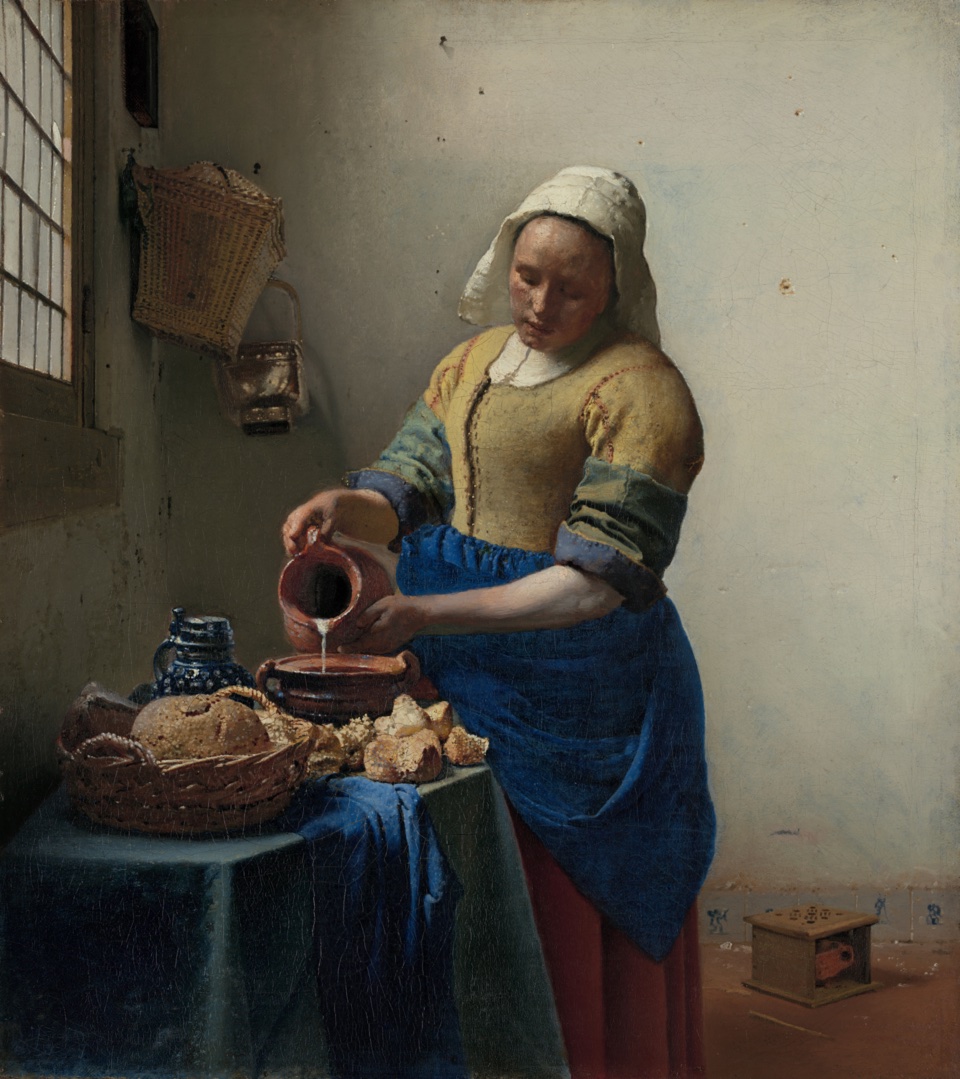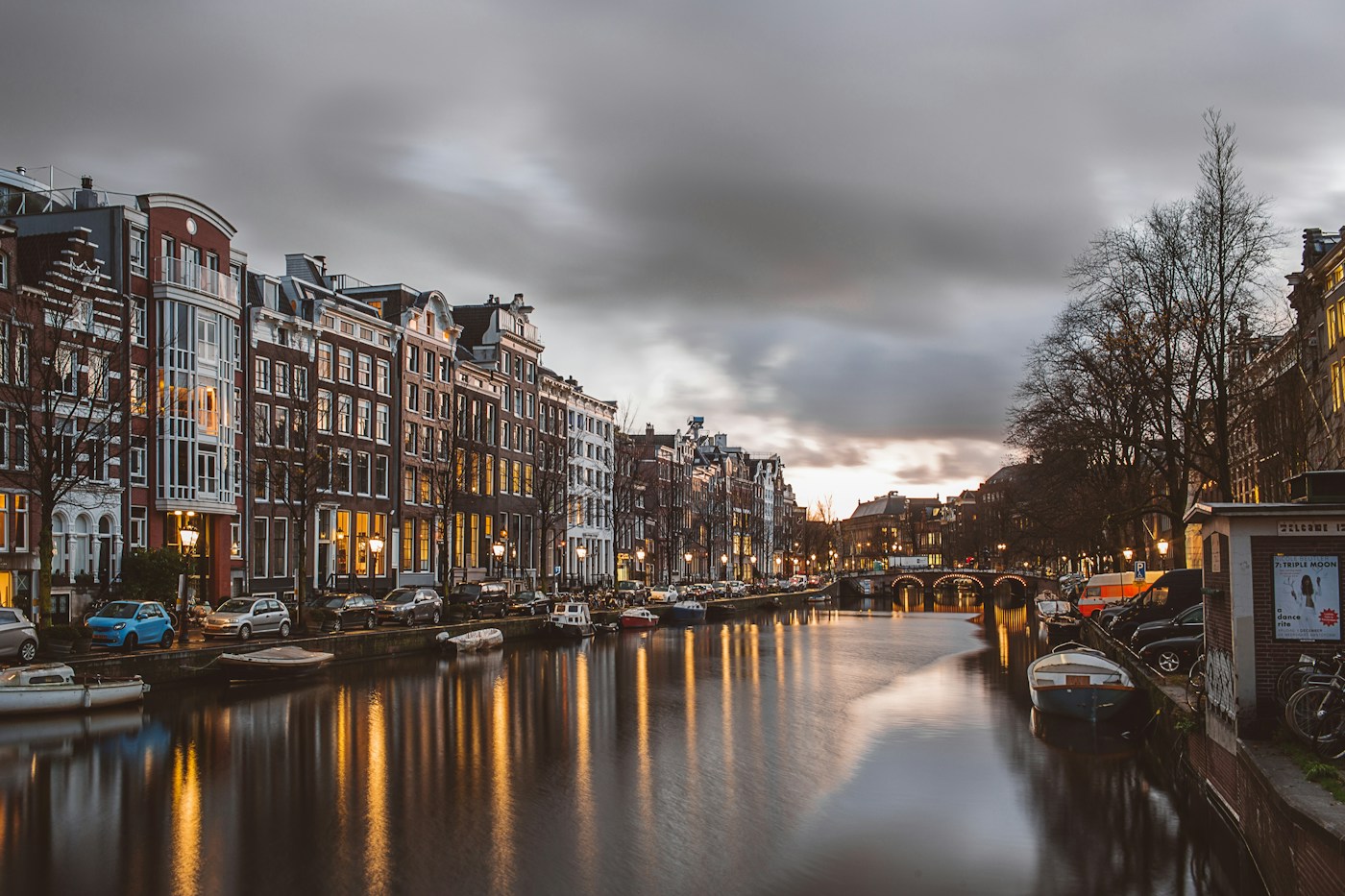
A canal street is more than an attractive background. Water, bridges, plots and buildings together reveal how a city was organised. Look at the relationship between the street and the canal, then at how individual houses fit into a continuous frontage.
Start with the skyline
Compare the rooflines of neighbouring buildings. Stepped, curved and triangular gables create different silhouettes. They can offer clues to architectural fashion, but a facade alone is not a reliable date: buildings may have been altered or restored. Use local heritage information when you want to identify a particular house.
Look at materials
Red brick and pale stone details appear together in many historic Dutch buildings. Examine how window surrounds, cornices and entrance steps organise a facade. Small changes in brick colour or mortar may show repairs. A large window can tell you as much about the interior’s relationship with daylight as a decorative gable tells you about status.
Notice the working city
Canals are part of urban infrastructure, not simply scenery. Think about movement: where could goods arrive, how do bridges connect routes, and where do people cross today? Compare a busy commercial street with a quieter residential stretch. Keep cycling lanes and doorways clear while stopping to look.
Connect buildings across periods
The Netherlands offers architectural experiences well beyond canal houses. A cultural trip might pair a historic streetscape with modern housing or a contemporary public building. The contrast makes it easier to see how changing needs, materials and ideas reshape a city.
A self-guided observation walk
Choose a short route and record three rooflines, two material combinations and one relationship between water and street. You do not need a long itinerary. Take breaks, follow local signs and remember that many picturesque buildings are private homes.
Continue with the original sources
Visitor arrangements can change. Check the venue directly before travelling.