A painted room can hold your attention as strongly as a dramatic historical scene. In Dutch painting, a jug, an open doorway or a patch of light may become the centre of the experience. Begin by looking carefully before reading the title: where does your eye go first, and how does the composition guide it?
Follow the light
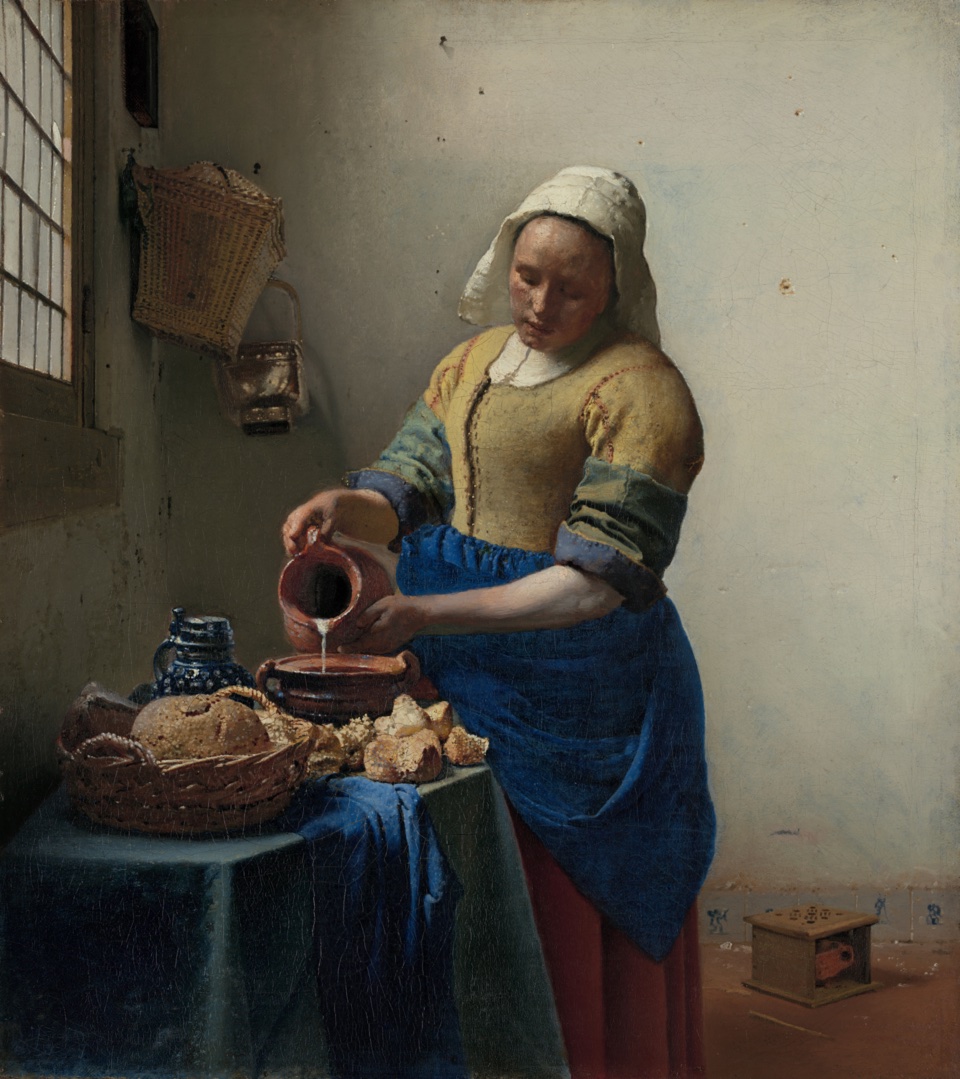
Find the brightest area and then look for its source. Is the light coming from a window, a candle or somewhere outside the frame? Notice how shadows describe volume. A white wall may contain warm, cool and grey passages rather than a single flat colour.
In Vermeer’s The Milkmaid, a woman pours milk in a room lit from the left. The Rijksmuseum dates the painting to around 1660. The controlled movement and the play of light on objects make an everyday task worth sustained attention. Compare the stillness of the room with the narrow stream of milk.
Read the objects carefully
Objects might suggest domestic work, trade, pleasure or social position. Some also carried symbolic meanings for contemporary audiences, but a single object does not always have one fixed meaning. Treat a museum label or a researched catalogue as a starting point for interpretation rather than guessing from a modern association.
Change your viewing distance
From a distance, look at the arrangement of large shapes. Closer up, observe edges, reflected light and the handling of paint, while respecting barriers and other visitors. A reproduction can help you prepare, but it changes the scale and may alter colours.
A small looking exercise
Choose one painting and spend a few minutes with it. Identify three details, form one question and then read the label. Notice which of your first impressions changed. The aim is to build a personal way of looking, without needing to memorise an entire history of art.
Continue with the original sources
Visitor arrangements can change. Check the venue directly before travelling.