Blue and white ceramics are one of the most recognisable associations with Delft. Yet a painted plate or vase deserves more than a quick glance at its colour. Shape, surface, decoration and use together help explain why ceramics connect the history of design with ordinary life.
Look at the form first
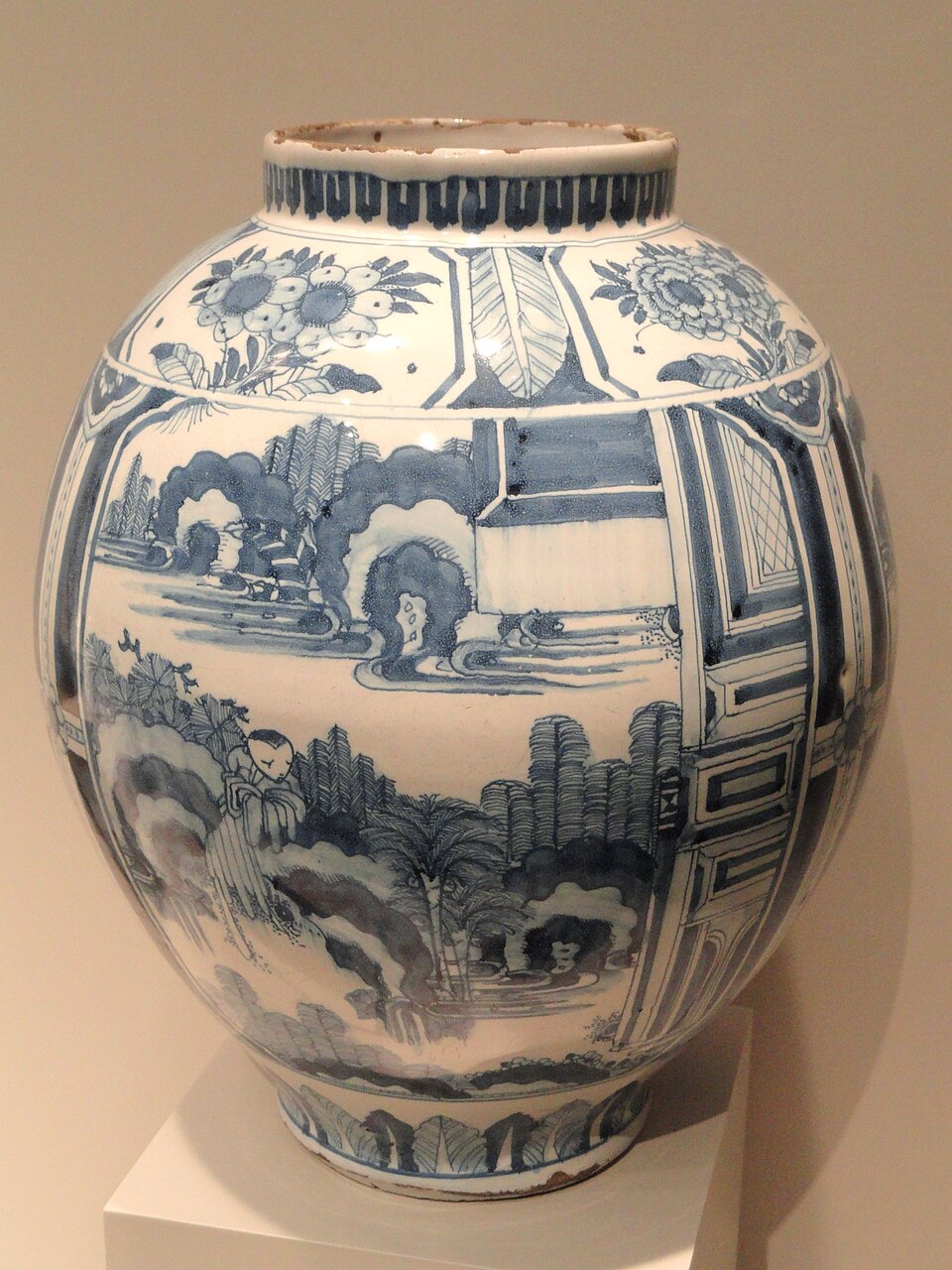
Before studying the painted pattern, consider the object’s silhouette. Is the neck narrow or wide? Does the handle look practical, decorative or both? Imagine how the piece would be lifted, displayed or placed on a table. An object made for display may make different choices from one intended for frequent handling.
Follow the decoration
See how the painter divides the surface. A central scene, a border and smaller repeated motifs can produce a rhythm around a bowl or plate. Notice whether the decoration responds to the shape or treats it as a flat picture. Differences in brushwork can be easier to see near a rim or handle.
Ask about material and origin
A blue and white appearance alone does not establish where, when or how an object was made. Read the collection record or ask the maker about materials and production. When buying ceramics, distinguish a modern decorative piece from an antique, and a printed design from hand-painted work. A mark should be interpreted in context.
Delft as a cultural stop
Delft’s canals, historical facades and associations with Vermeer make it a useful place to connect craft, painting and urban history. Look for ceramics in the city’s public environment as well as in collections. For workshop visits or demonstrations, consult the provider’s own current information before travelling.
Take one detail from a ceramic object back into your next museum visit: the curve of a handle, a repeated border or the way blue paint pools at the end of a stroke. Small observations create connections between otherwise separate collections.
Continue with the original sources
Visitor arrangements can change. Check the venue directly before travelling.